A Hunan key enterprise for Africa trade · 80 of 118 staff hired locally in Africa
Call us: +86 731 8876 6661
中文 / English
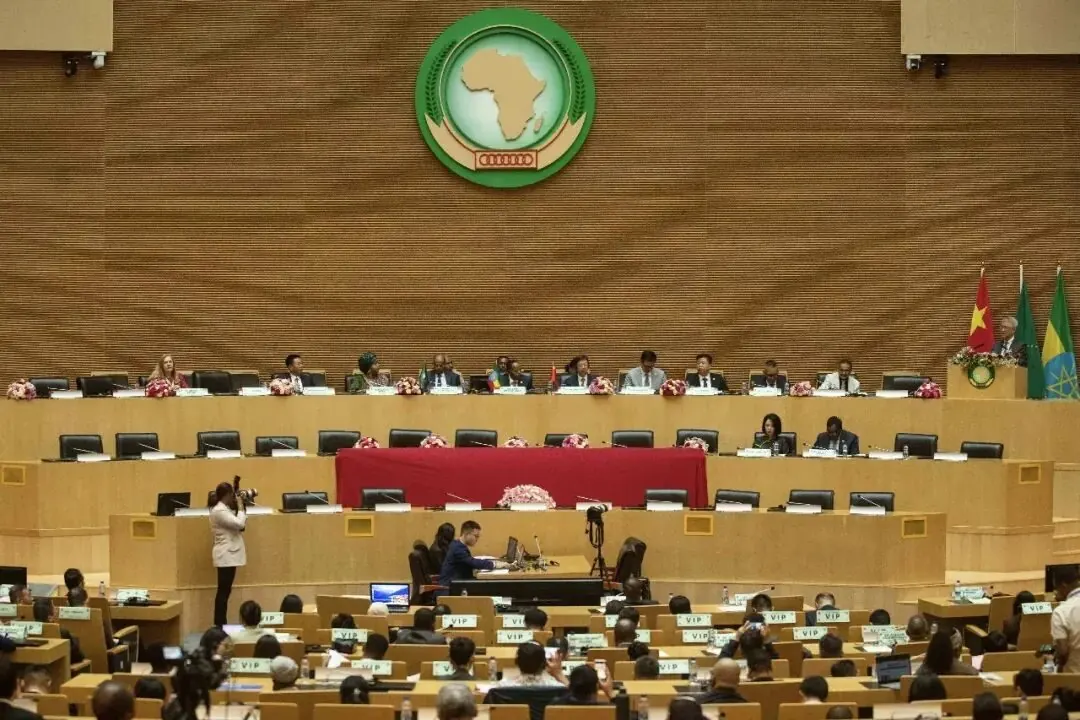
Recently, the first China-Africa Entrepreneurs High-Level Forum was held at the African Union headquarters in Addis Ababa, the capital of Ethiopia. Mining development was listed as one of the five core segments and became a focus of China-Africa practical cooperation. At the same time, China announced that from May 1, 2026, it will implement zero tariffs in full on 53 African countries that have diplomatic relations with China, so that Africa's rich key mineral resources — gold, lithium, cobalt and copper — will enter the Chinese market more smoothly. Driven by both favorable policies and market demand, Chinese mineral companies' investment in Africa is undergoing a fundamental shift from “resource acquisition” to “industrial co-building”, and four new trends are becoming increasingly prominent.
|Trend one: from single-mine acquisitions to integrated layout across the entire industry chain
In the past, Chinese mining companies in Africa mostly took minority stakes in, or acquired, individual mines. Today, the integrated development model represented by the Simandou iron ore project in Guinea is becoming the new paradigm. With total investment of more than US$20 billion, the project covers mines, railways, ports and other systemic works. It is being advanced by China Baowu in coordination with central SOEs such as Chinalco and China Railway, and uses Chinese standards, Chinese design, Chinese construction and Chinese equipment throughout. It is China's first overseas iron ore project led end to end, from resource exploration to transport and sales. In December 2025, the first shipment of 200,000 tonnes of iron ore from Simandou was successfully dispatched home, formally opening the full industry-chain corridor of “mine — railway — port — shipping”. Once ramped up, the project will have an annual capacity of 120 million tonnes, which is expected to break the long-standing monopoly of Rio Tinto, BHP and Vale over the global iron ore market and significantly strengthen China's influence in global iron ore pricing.
In Zimbabwe, Chinese enterprises have likewise completed the leap from simply buying mines to an integrated “mining — beneficiation — smelting” industry-chain layout. Companies such as Sinomine Resource, Huayou Cobalt and Chengxin Lithium have not only acquired large lithium mines including Bikita and Arcadia, but have also built supporting beneficiation plants and lithium carbonate plants, lifting Zimbabwe's share of global lithium output from 0.6% in 2022 to 10% in 2025 and making the country the world's fourth-largest hard-rock lithium producer. In Mozambique, Jin'ang Holding is planning and building the China-Mozambique Mining Cooperation Demonstration Zone, a modern industrial park integrating exploration, mining, smelting, logistics, trading and equipment manufacturing, with the aim of becoming a model project for China-Africa green mining cooperation.
|Trend two: from resource exports to local value addition and industrial rooting
African countries' awareness of resource sovereignty is increasingly awakening, and they are promoting local mineral processing through policy means. The DRC introduced a cobalt export quota system in 2025, capping exports at 96,600 tonnes a year from 2026 to 2027 — less than half of the country's 2024 output — in order to force the development of local refining and downstream manufacturing. Zimbabwe has gone further by fully implementing its ban on lithium concentrate exports ahead of schedule, mandating local value-added processing.
Faced with these policy changes, Chinese mining companies are proactively adjusting their strategies, converting “resource dividends” into “industrial capability”. In the DRC, more and more Chinese enterprises are planning or building localized smelting capacity so that the added value of strategic minerals is retained on the African continent. In Zambia, digital mines are lifting copper mining efficiency to new heights; in Zimbabwe, Huayou Cobalt has invested in a beneficiation plant and a lithium sulfate plant, and Huajing Technology's lithium sulfate plant was commissioned in the first quarter of 2026, becoming the country's first large lithium salt smelter. In Tanzania, the integrated gold and nickel mining, beneficiation and smelting system built by Kuangduoduo, a Jin'ang Holding platform, is leading small and medium-sized mine owners in the Mbeya area to develop together. This mindset of “industrial rooting” creates a positive interaction with the policy trend of African countries strengthening resource sovereignty.
|Trend three: from extensive development to green mining and high ESG standards
At the 2025 G20 Summit, China and Africa jointly advocated green minerals and industrialization cooperation, heralding the birth of a new type of partnership. Against this background, Chinese mining companies' ESG practices in Africa have clearly accelerated. In October 2025, the Sub-forum on Chinese Mining Companies' Overseas Responsibility Exploration was held in Tianjin, where the White Paper on Community Development and Responsibility of Chinese Mining Enterprises in the DRC was released. A number of mining companies jointly signed an action initiative on fulfilling responsibilities, marking a new stage in which Chinese mining companies are moving from “individual exploration” to “collective action”.
According to the white paper, in 2024 the 15 Chinese mining companies surveyed in the DRC contributed more than US$2 billion in taxes and royalties, accounting for 22% of the DRC's national fiscal revenue; the local employment rate exceeded 90%, and 500,000 local employees had been trained cumulatively. The DRC development assistance project carried out by Huayou Cobalt in cooperation with the China Foundation for Rural Development has become an industry benchmark for fulfilling responsibilities through localized operations and community co-building. Northern Mining has more than 3,000 local employees in the DRC and has set up a dedicated “Chinese language + vocational skills” training center to systematically advance the cultivation of local talent. CMOC's TFM project has become the first mine in Africa to obtain Copper Mark certification, benchmarking its ESG practices against the highest global standards.
|Trend four: risk control upgraded from reactive response to systematic construction
The political, security and compliance risks of mining investment in Africa cannot be ignored. Armed conflict in eastern DRC, kidnapping and extortion by rebel groups in the Central African Republic, and the expulsion of Chinese executives by Niger occur from time to time. In Zambia, a farmers' group has filed a compensation claim of up to US$80 billion against a Chinese company, reflecting the complex social environment Chinese enterprises face in their African operations.
In response, Chinese mining companies are shifting from reactive response to the systematic construction of risk prevention and control systems. Advance risk assessment, use of bilateral investment protection agreements and establishment of emergency mechanisms have become standard practice. Industry insiders point out that the biggest challenge of mining investment in Africa has never been the mineral resources themselves, but the political ecosystem in which regime change, political turbulence and resource nationalism intertwine. The bottom-line principle of “not going to dangerous places” must be upheld, and priority should be given to countries with relatively stable political situations that have signed investment protection agreements with China.
From the world-class iron ore project in Guinea to the cobalt processing chain in the DRC, from lithium salt smelting in Zimbabwe to the mining cooperation demonstration zone in Mozambique, Chinese mineral companies in Africa are transforming from “acquirers” of resources into “enablers” of industrial capability and “fellow travellers” of the green transition. In 2025, China-Africa trade reached US$348 billion, up 17.7% year on year and setting another record high. With the full implementation of the zero-tariff policy and the continued deepening of the FOCAC mechanism, China-Africa mining cooperation is entering a new stage of high-quality development characterized by “extensive consultation, joint contribution and shared benefits”.
© 金昂控股集团 · 转载请注明来源 https://www.jinanggroup.com/en/news/BddV8dnB.html