A Hunan key enterprise for Africa trade · 80 of 118 staff hired locally in Africa
Call us: +86 731 8876 6661
中文 / English
According to MINING.com, Panama is preparing to negotiate with First Quantum Minerals on a possible restart of its closed Cobre Panama copper mine, which is expected to restart by the end of this year or in early 2026.
Panama's Minister of Commerce Julio Moltó confirmed that a comprehensive environmental audit of the mine will begin in the coming weeks, with SGS Panama Control Services assessing the mine's environmental, social and economic impacts as well as job opportunities. After reforming the pension system of the national social security fund, President Mulino made restarting Cobre Panama a top priority of his government. First Quantum's subsidiary Minera Panamá has suspended international arbitration proceedings against the Panamanian government, clearing the way for negotiations. The restart of this world-class copper mine will inject a shot in the arm into the jittery global copper supply.
Cobre Panama is listed as one of the world's largest undeveloped porphyry copper deposits, isolated in Panama's tropical rainforest. Before this, Panama had almost no mining industry, and the Cobre Panama project was the country's most important engineering undertaking since the opening of the Panama Canal a century earlier. In the early 2010s, First Quantum had successfully grown into a mining giant worth billions of dollars, with considerable cash flow and growing expansion ambitions, and company founder Philip Pascall set his sights on Cobre Panama. Construction of the mine began in 2011, when it was in the hands of Inmet Mining Corp. In March 2013, after being rejected twice by Inmet, First Quantum launched a hostile takeover, acquiring Inmet, the owner of the deposit, for US$5.5 billion, thereby obtaining an 80% interest in Cobre Panama; the remaining 20% was held by the Panamanian government and a Korean company, LS-Nikko Copper Co. Ltd.
First Quantum's success is closely related to the personality of its leader Philip Pascall and to the extraordinary relationship he built with Ricardo Martinelli and Juan Carlos Varela, who served as President of Panama from 2014 to 2019; Philip was a guest of honor of President Varela. It was a huge gamble: First Quantum took on a heavy debt burden to finance the project's construction and barely avoided breaching loan covenants. Although miners usually reduce risk in uncertain jurisdictions by partnering with other companies, Philip kept betting, acquiring LS-Nikko Copper Co. Ltd.'s stake for US$635 million and raising its interest to 90%, creating a US$10 billion mining complex capable of producing more than 350,000 tonnes of copper a year. In an industry where many of the largest deposits have been depleted over decades, this was a rare case of a large new mine. The acquisition was an important milestone in First Quantum's development, and after Cobre Panama began production in 2019, it vaulted the company's annual copper output into the ranks of the world's top copper miners.
The crux of the Cobre Panama project was its tax standard: the project's taxes were set under a contract signed in 1997, when copper prices were at record lows and long before the deposit's value was fully realized. The contract details First Quantum inherited from the concession's previous owner required payment of a 2% royalty on mineral revenue — reasonable at the time, but copper prices had changed dramatically since. In the years before mining began at Cobre, then-President Varela, a former Supreme Court judge and board members all pressured First Quantum to renegotiate the contract to meet the country's higher tax demands, but Philip ignored them. In 2017, Panama's Supreme Court ruled the operating contract unconstitutional and required First Quantum to renegotiate with the Panamanian government.
In 2019, the first full year of Cobre Panama's operation, the mine paid Panama royalties equal to one-sixth of what First Quantum paid Zambia for its Kansanshi mine. The disparity was enough to provoke the anger of the new center-left government led by successor Laurentino Cortizo, which began taking action to secure a better tax deal for the country. At the time, Panama was in a catastrophic recession triggered by the COVID-19 pandemic; with the Panama Canal idle, employment had fallen sharply and inflation had soared, and the government urgently needed to fill its coffers, making First Quantum a prime target. A second round of negotiations began in 2021, during which Cobre Panama continued normal operations. In October 2023, the two sides reached a new contract under which First Quantum regained a 20-year mining right at Cobre Panama with an option to extend for another 20 years, on condition of paying the Panamanian government US$375 million a year. The new contract again aroused local opposition, and initial environmental protests evolved into anti-government demonstrations involving official corruption and national sovereignty. On November 28, 2023, Panama's Supreme Court finally ruled the operating contract unconstitutional and shut down Cobre Panama.
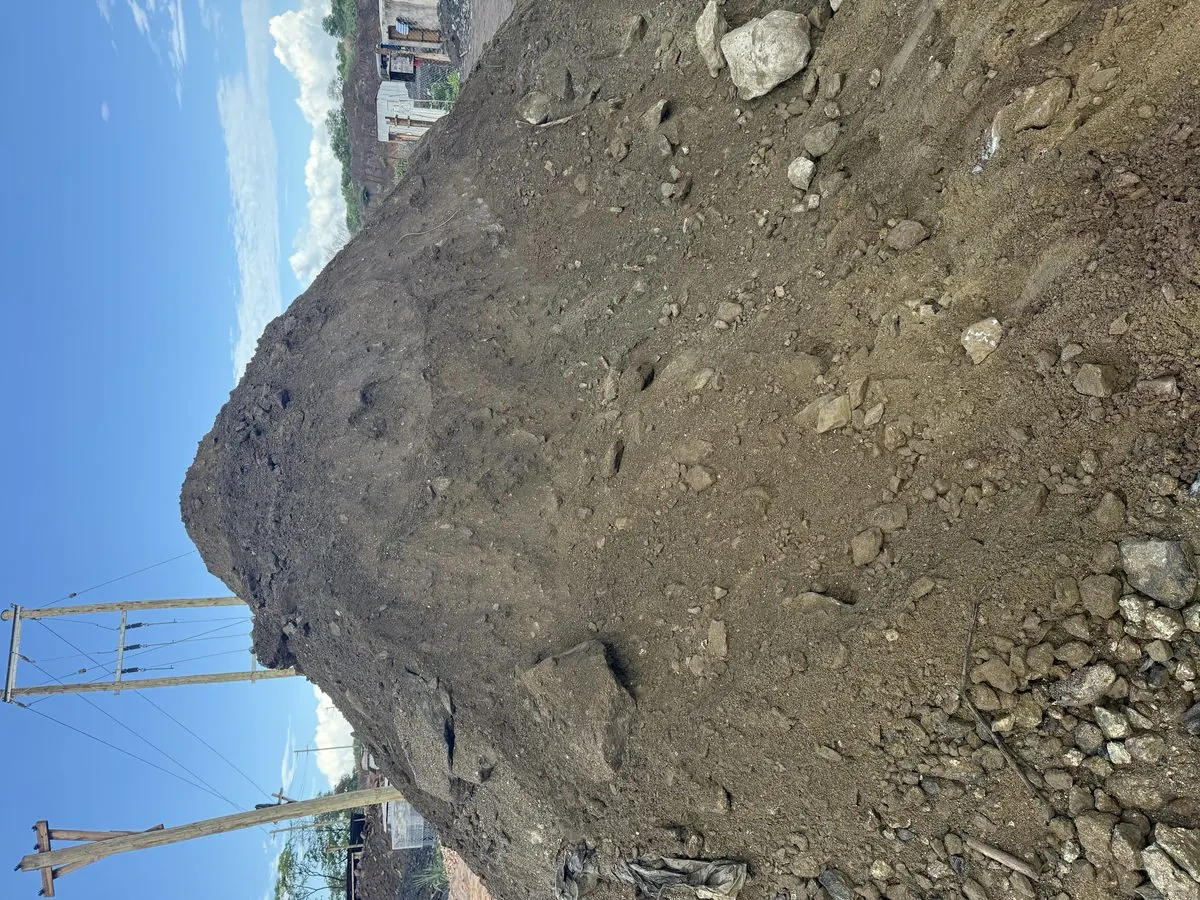
Cobre Panama has an annual output of 350,000 tonnes, accounting for more than 40% of First Quantum's copper output, about 1.5% of world copper output, 5% of Panama's GDP and 75% of its exports, and supports at least 6,000 direct jobs. The suspension inflicted major economic losses on both First Quantum and Panama. As of December 31, 2023, net loss attributable to shareholders was US$954 million, including a net loss of US$1.45 billion in the fourth quarter. First Quantum's 2024 copper production guidance was 370,000-420,000 tonnes, nearly halved from 707,700 tonnes in 2023. First Quantum publicly stated in its financial report that the closure of Cobre Panama had plunged the company's finances into uncertainty and could raise doubts about its ability to continue as a going concern. Facing the crisis of the mine's closure, First Quantum announced it would take its dispute with the Panamanian government to international arbitration. In February 2024, First Quantum initiated arbitration proceedings at the International Centre for Settlement of Investment Disputes in Miami, Florida, claiming a minimum of US$20 billion in damages from the Panamanian government.
To ease the severe debt crisis caused by the mine's closure, in January 2024 First Quantum CEO Tristan Pascall (Philip's son and successor) announced a series of major restructuring plans: suspending the dividend; laying off workers at Cobre Panama and the Ravensthorpe nickel mine in Western Australia; selling smaller mines and seeking strategic equity partners for its large mines; extending US$2.2 billion in corporate bank loans to April 2027; issuing US$1 billion of common shares to underwriters including Goldman Sachs and RBC Capital Markets; and launching a private placement of US$1.6 billion in senior notes. Jiangxi Copper, First Quantum's largest shareholder, also actively extended a helping hand at the critical moment. In February this year, Jiangxi Copper signed a US$500 million prepayment agreement with First Quantum for 150,000 tonnes of anode copper, greatly easing its financial pressure; in March, it subscribed for 25.863 million common shares in First Quantum's public offering for C$287 million, and after completion of the subscription held a total of 18.48% of its shares, with its shareholding ratio unchanged. According to Reuters, First Quantum is currently in negotiations with Jiangxi Copper over the sale of its stake in its Zambian mine.
Headquartered in Canada, First Quantum is one of the fastest-growing international mining companies of the past decade, focusing on the development of copper and associated metal resources, with assets mainly in Africa, Europe, South America and Australia. The company's history dates back to 1983; it became a partnership in 1996 and adopted its current name. Since 2000, its shares have been listed on the Toronto Stock Exchange, the London Stock Exchange and the Lusaka Stock Exchange, among others, and are now traded only on the Toronto Stock Exchange. Founder Philip Pascall is a bold and flamboyant Zimbabwean who built First Quantum from scratch through bold bets. Pioneering projects such as Cobre Panama have always been the hallmark of First Quantum's business. Philip is a shrewd and charismatic leader who has built close relationships with key politicians in host countries. He and his brother developed copper mines in high-risk countries such as Zambia and the DRC, where few competitors dared to venture.
Copper mine projects usually take decades to build, but First Quantum is known for always completing projects ahead of schedule. In 2013 Philip proudly said: “We dare to try what others dare not, we try new things, we learn from our experience, and we have earned a reputation in an industry prone to budget overruns and late delivery.” From the first pot of gold at the Bwana Mkubwa copper mine in Zambia, to exploring the Lonshi and Frontier copper mines, to acquiring Kansanshi and Guelb Moghrein to establish its leading position in Africa, to acquiring Finland's Kevitsa copper mine to transform into an international mining company, to acquiring Inmet Mining to gain three producing copper mines in South America — Las Cruces, Pyhäsalmi and Cayeli — plus the undeveloped Cobre Panama and join the first tier of global mining — First Quantum's path has been distinctive. First Quantum's currently operating mines include Kansanshi in Zambia, Guelb Moghrein in Mauritania, Sentinel in Zambia, Çayeli in Turkey, Las Cruces in Spain, Pyhäsalmi in Finland and Ravensthorpe nickel mine in Western Australia. These include three world-class mines in production and three projects awaiting development, controlling a total of about 49.25 million tonnes of copper resources, with attributable copper resources of 45.9 million tonnes. It also has two large nickel mines in Australia and Zambia, with total resources of 2.38 million tonnes.
Despite being in crisis, First Quantum's position in global mining remains prominent. In the 2024 “Top 50 Global Mining Companies” list published by MINING.com, First Quantum ranked 34th and was rated one of the most promising companies in copper. In 2022, the company produced 776,000 tonnes of copper, 22,000 tonnes of nickel and 283,226 ounces of gold; copper accounted for 86% of revenue, with gold and nickel accounting for 5% and 6% respectively. In 2023, copper output was 708,000 tonnes, down 9% from 2022, of which Cobre Panama produced 331,000 tonnes of copper before its closure and Zambia produced 349,000 tonnes. Especially in undeveloped resource reserves, First Quantum always surprises investors. On August 28 this year, First Quantum announced with much fanfare that it had acquired a 55% stake in Peru's La Granja copper project for US$105 million and formed a joint venture with Rio Tinto to develop it, with First Quantum as the majority shareholder responsible for operating La Granja. The project is listed as the world's fifth-largest copper mine, with inferred mineral resources of 4.32 billion tonnes at 0.51% copper.
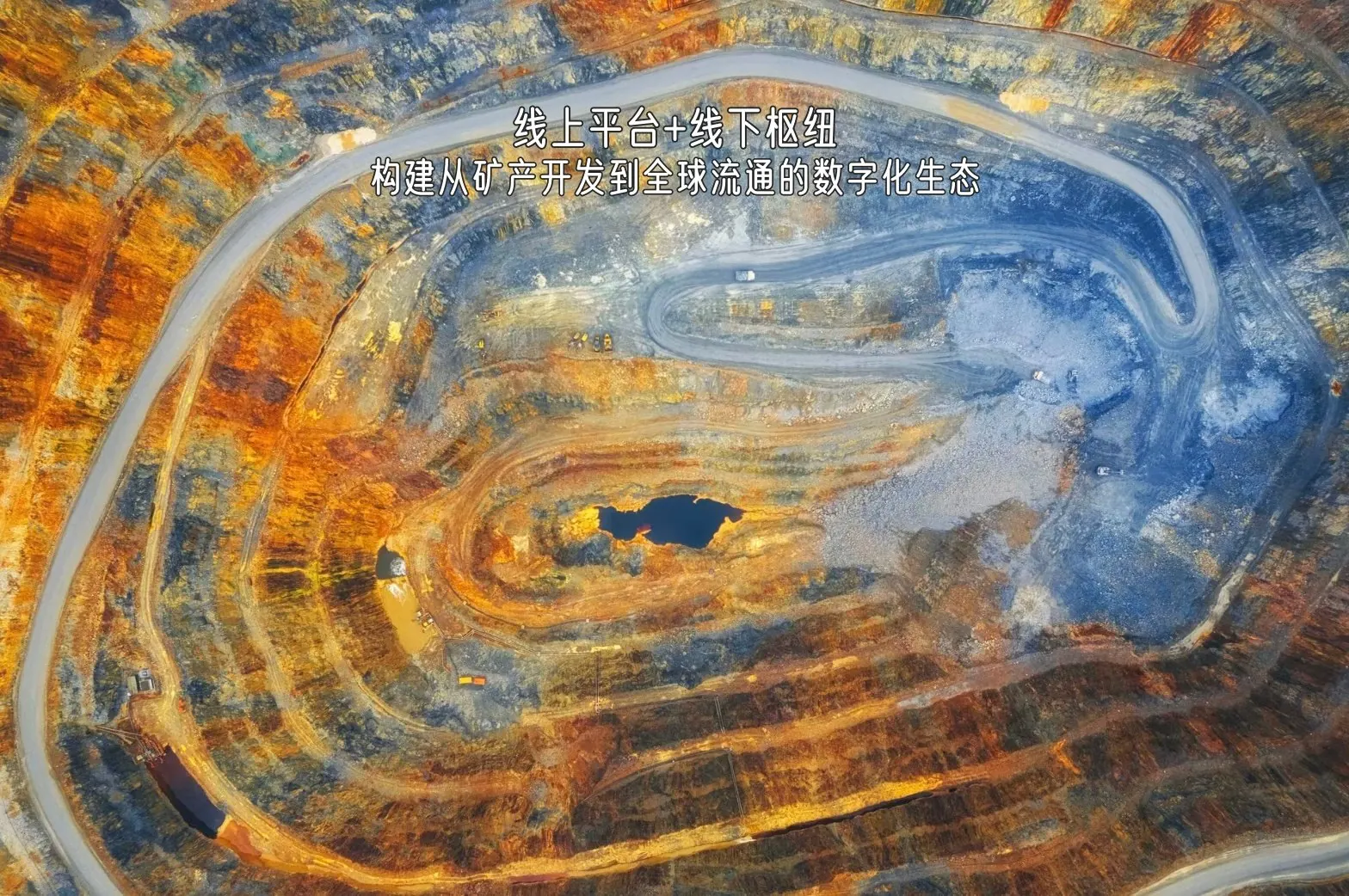
Different understandings of mining development and vastly different circumstances have produced mining companies with very different styles. If mining development is viewed as a game of Go, then the layout based on self-awareness and industry understanding is the key to victory. In this respect, First Quantum's approach is noteworthy.
Clear strategic positioning. The types of minerals a mining company operates interact with the types of deposits it owns, and it is easy to end up operating several main minerals at once. From its earliest days, First Quantum quickly established a strategic positioning centered on copper resources. At the time, the global copper market was in deep depression, but the company's leadership firmly believed that copper's value was seriously undervalued and that there was still much room for copper prices and demand to rise, and it set long-term goals based on copper. Low-cost acquisitions during the industry trough brought the company rich returns during the golden development period of the international copper industry. Before 2012, copper revenue consistently accounted for about 90% of the company's operating revenue. With the commissioning of the Ravensthorpe and Kevitsa nickel mines in 2012, copper's share of operating revenue stabilized at around 80%.
Efficient resource replacement. Resource replacement is the foundation of a mining company's enduring success, and First Quantum has produced frequent highlights in high-quality resources. The early development of Zambia's Kansanshi, then Africa's largest copper mine, and the new Sentinel copper mine established the company's status as a world-class miner. In August 2001, First Quantum acquired an 80% stake in the Kansanshi mine, which after commissioning in April 2005 once accounted for 86.72% of the company's copper output. In January 2010, First Quantum acquired 100% of the Sentinel project. In 2017, First Quantum produced 574,000 tonnes of copper, with Kansanshi and Sentinel together accounting for 76.9%. The 2013 acquisition of Inmet Mining brought Cobre Panama into its portfolio and propelled the company into the top ten global copper miners. After the Cobre project was blocked, the company accelerated the La Granja copper project in Peru and the Phase III expansion of Kansanshi in Zambia, and its prospects remain promising.
Outstanding exploration advantages. First Quantum started as a mineral exploration company, and exploration investment has always been a top priority. Its crowning achievement is increasing reserves at existing mines through deep and lateral exploration, converting technological advantages into resource advantages. In 1997, exploration around the Bwana Mkubwa deposit doubled the mine's life; in 2000, exploration discovered the Lonshi copper mine; and in 2004, exploration discovered the Frontier copper mine. These three mines were all important early assets of the company. In 2010, the company achieved a breakthrough in exploration at the Haquira copper project in Peru; in 2012, exploration expanded the resources of the Kansanshi copper mine. This early exploration advantage played a huge role in increasing reserves at Cobre Panama.
Strong operating capability. In the course of its development, First Quantum has distilled a standardized system that keeps mine construction times, mine output and cost control consistently ahead of the industry. For example, while Kansanshi was continuously increasing output, its total copper production cost fell to US$1.71/lb in 2017; after BHP shelved its US$3.5 billion Ravensthorpe nickel project, First Quantum restarted the project with only US$190 million of modifications. Through long-term focus on copper, it has accumulated experience in copper resource development and operations, further strengthening its position as a globally leading copper producer.
Balanced global layout. The uneven distribution of elements in the earth's crust leads to an uneven distribution of mineral resources among countries, which determines that mining companies must lay out globally if they want to obtain internationally competitive mineral resources. When First Quantum had accumulated enough capital to go global, it resolutely pursued global expansion. During the expansion cycle, First Quantum allocated assets in a balanced way across continents rather than expanding blindly, with a particular preference for acquiring undeveloped high-quality copper mines and using its outstanding exploration and project operating capabilities to further expand its competitive advantage.
First Quantum was founded as a mineral exploration company and became a globally leading copper producer in just over forty years, a remarkable pace. In a landscape where the world's high-quality copper resources have already been divided among mining giants, First Quantum started from tailings, accumulated experience and advantages in operating low-grade mines, consolidated its advantageous mines, and when the time was right sought global expansion, eventually securing world-class resources and achieving tremendous success. In particular, its series of measures to turn the crisis around at Cobre Panama fully demonstrate its unique insight into mining philosophy, deep accumulation in crisis management and refined layout in resource maneuvering. For Chinese mining companies that generally went global later, First Quantum's development experience offers much to learn from.
© 金昂控股集团 · 转载请注明来源 https://www.jinanggroup.com/en/news/bz7xvJYB.html